AS/RS Plastic Pallet Selection: 7 Checks Before You Buy
Start with the load and every equipment interface. Then compare pallet designs and confirm the selected configuration with a representative sample.
In this guide
An AS/RS plastic pallet should be selected against the complete handling route, not its dimensions or headline load rating alone. For a new automated warehouse or a replacement project, confirm seven things: the unit load, machine envelope, rack support, conveyor and shuttle interfaces, deck design, operating environment, and sample acceptance criteria.
This guide helps warehouse buyers and automation integrators turn those checks into a comparable request for quotation (RFQ). The checklist is a starting point for project discussions; equipment-specific limits must come from the system designer and the agreed pallet specification.
1. Define the unit load, including how it touches the deck
Start with what the pallet actually carries. Record the goods weight, packaging weight and loaded footprint. Identify whether each equipment limit refers to the payload or the total moving mass, including the pallet. Keeping those two figures separate prevents a misunderstanding between the pallet supplier and the automation team.
Next, describe the load pattern. Cartons spread over the deck, bags with flexible bases, drums and a machine on small feet create different contact conditions. A total weight alone leaves that distinction out. Include a photograph or a simple top-view sketch showing the contact areas, centre of gravity, any overhang and the method of securing the goods.
What to send: normal and maximum load, package type, contact pattern, loaded height and any off-centre loading. If the same pallet handles several products, list the different patterns for review instead of assuming the heaviest load is always the only critical case.
2. Check the full machine envelope, not just length and width
A nominal 1200 × 1000 mm footprint does not define pallet height, fork-opening clearance, runner width, edge details or manufacturing tolerances. These details matter at transfer stations, guides and pickup positions.
Use the latest dimensional drawing to compare the pallet with the equipment’s approved interface. Confirm the loaded envelope too: stretch wrap, leaning cartons and product overhang can extend beyond the empty pallet. Let the equipment designer specify permissible tolerances and clearances; do not assign a universal tolerance to every AS/RS installation.
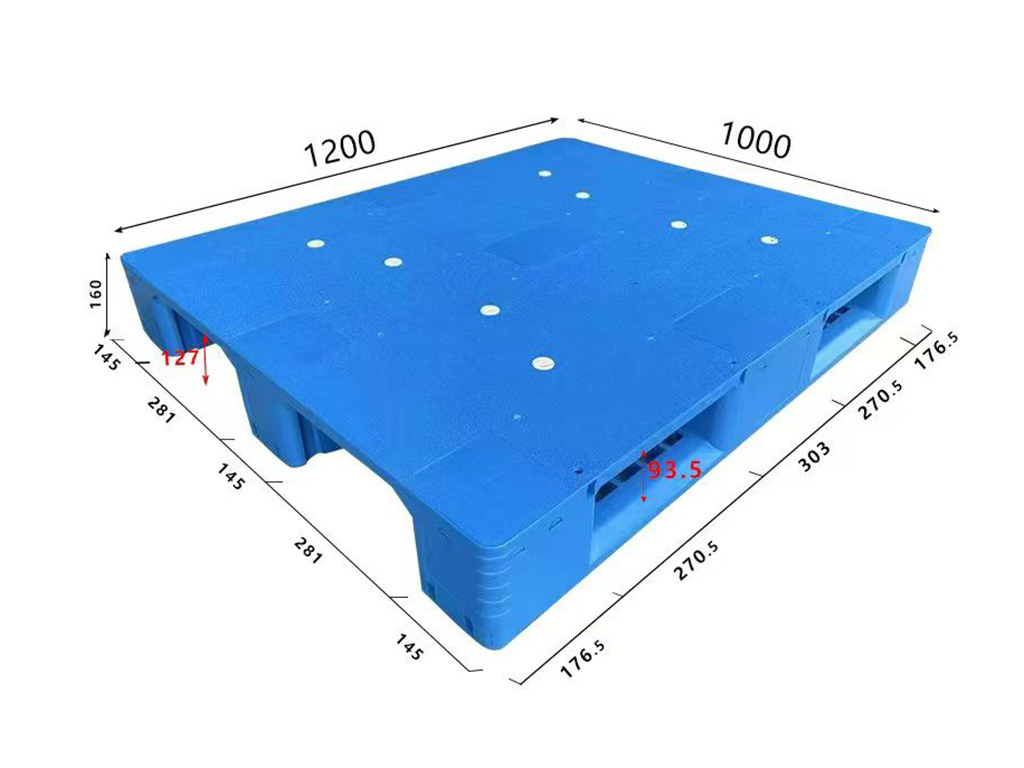
What to send: required length, width and height, travel orientation, fork or lifting dimensions, loaded height and the equipment interface drawing. State whether you are replacing an existing pallet or selecting a new format.
3. Match rack-load information to the actual support condition
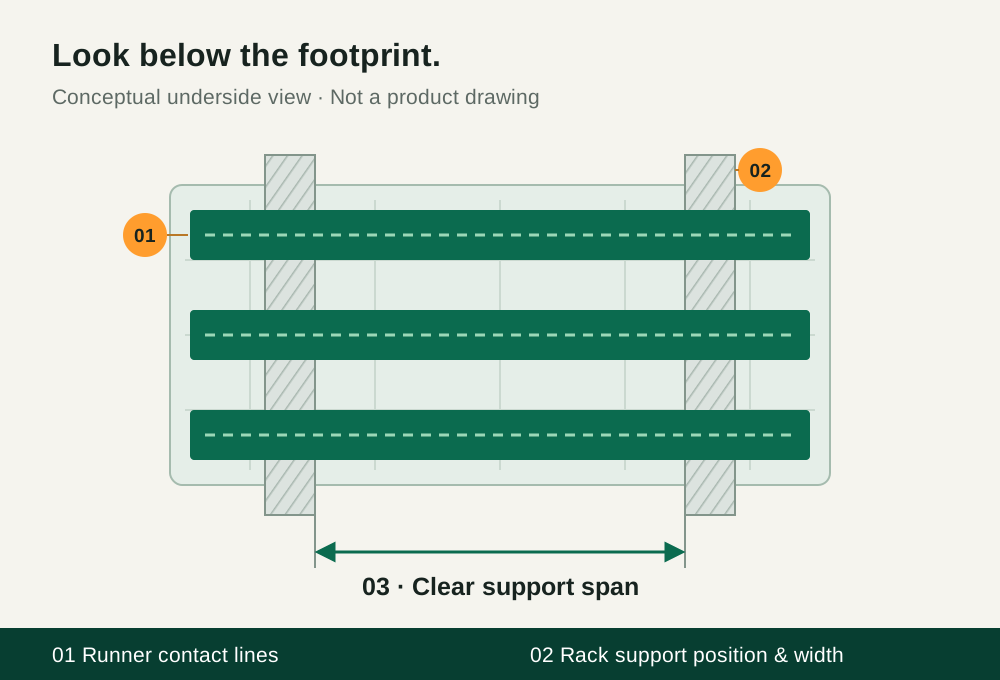
Static, dynamic and rack-load figures describe different conditions. A floor-supported figure is not a substitute for a rack-supported value. For racking, identify the support type, direction, clear span, contact width and contact position, together with the load distribution, temperature and longest loaded storage time.
ISO 8611-3 addresses maximum working loads for known payloads in different handling environments. That is a useful reason to ask for the conditions behind a supplier’s number, rather than comparing catalogue figures as though the conditions were identical.
What to ask the supplier: which exact model and reinforcement configuration does the stated rack load cover, under what support and loading conditions, and what supporting record is available? If a condition is missing, keep it as an open item in the selection sheet.
For a closer look at these variables, see why rack load is not a single number.
4. Review every conveyor, shuttle and pickup interface
Map the route from receiving to retrieval: infeed conveyor, centring station, lift, stacker crane or shuttle, rack location and outfeed. At each handover, compare the pallet underside with the actual support and moving parts.
Record roller spacing or chain positions, travel direction, transfer gaps, stops, guides, lifting points and sensor target areas. Check which surfaces contact the pallet while it moves and while it is lifted. A runner arrangement that works on one section still needs review where the support direction changes.
Ask the equipment provider to review the pallet drawing, including the underside. Arrange a loaded sample trial through the critical transitions, with acceptance criteria agreed beforehand. A dimensional check and a rack test each answer part of the question; the transfer trial checks the handling route.
Our conveyor and shuttle specification guide explains the interface information to collect.
5. Compare deck, base and reinforcement as one configuration
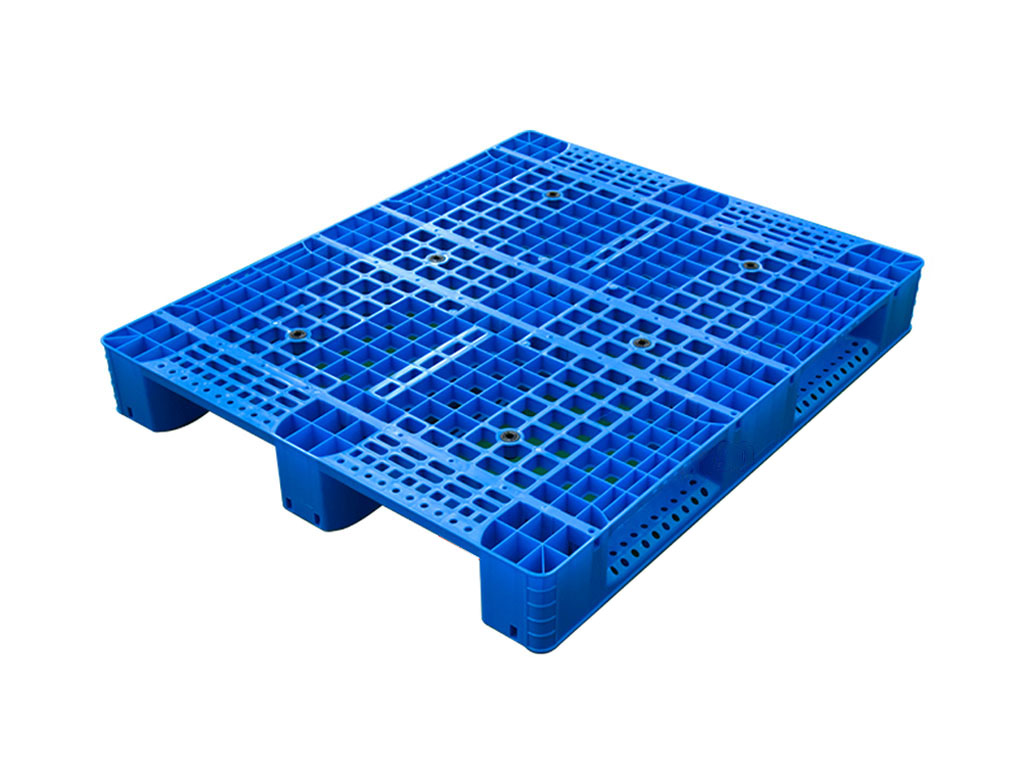
An open grid deck and a solid deck present different contact surfaces to the goods. Review package support, openings, drainage and cleaning access against your actual product and process. A grid deck alone does not establish cooling performance, and a solid deck alone does not establish a hygiene certification.
The base is a separate decision. Compare three-runner and full-perimeter designs against the conveyor and storage interfaces. Then identify any steel reinforcement by quantity, position and specification. The tube count on its own does not establish suitability for a particular rack span.
The two catalogue entries below illustrate why a model number needs its family name. They share a footprint but have different deck designs and listed heights.
| Catalogue detail | BH1210 Grid 3-Runner | BH1210 Solid 3-Runner |
|---|---|---|
| Listed footprint | 1200 × 1000 mm | 1200 × 1000 mm |
| Listed overall height | 150 mm | 160 mm |
| Deck | Open grid | Solid |
| Material listed | HDPE | HDPE |
| Next check | Package contact and underside interfaces | Package contact and underside interfaces |
Sources: BH1210 Grid 3-Runner and BH1210 Solid 3-Runner. These are catalogue details, not evidence that either configuration is approved for your installation. Confirm the drawing, material and reinforcement configuration in the quotation.
For reinforcement decisions, see when steel reinforcement adds value.
6. State the operating environment and storage duration
Give the supplier the normal and extreme temperatures along the full route, including cold storage, ambient staging and cleaning. Add the longest loaded dwell time and any washing chemicals or other relevant exposure. Ask for material and performance information applicable to those conditions.
Avoid approving a pallet from a generic material name such as “HDPE” or a broad temperature range alone. The material specification, structure, reinforcement and intended use need to be considered together. If food contact, fire performance or another special requirement applies, state the exact requirement and request documentation for the offered configuration.
What to send: temperature range by process stage, storage duration, cleaning method and any mandatory documentation. Keep required features separate from preferences such as colour or logo marking so quotes remain comparable.
7. Agree on the sample and acceptance plan before ordering
Use a representative sample of the proposed production configuration. Record its family, model, drawing revision, material specification, reinforcement details and identification. Agree with the pallet supplier and system provider on the load, support arrangement, environment, test duration and acceptance criteria before testing starts.
The review can include dimensional inspection, loaded storage and the critical handling transitions. Record what was checked, the result and anything still unresolved. ISO 8611-1:2025 provides pallet test methods and notes the continuing value of field tests on specific designs. Referencing a standard in an RFQ does not by itself show that a product has been tested or certified.
Before a production order, link the accepted sample to the written specification and agree how changes to the material, tooling or reinforcement will be reviewed. Keep the approved configuration identifiable when reordering.
Your AS/RS pallet RFQ checklist
Use this table to prepare the first enquiry. Unknown fields can stay marked “to confirm”; include the available photos and drawings so the open questions are visible.
| Information group | Include in your enquiry |
|---|---|
| Project | Country, new installation or replacement, quantity, target schedule |
| Unit load | Payload, total loaded mass, package type, contact pattern, loaded height |
| Pallet envelope | Length, width, height, fork openings, orientation, current drawing or photos |
| Storage support | Rack or rail type, clear span, contact width and support direction |
| Handling route | Rollers, chains, shuttle or crane, lifting points, transfers, guides and sensors |
| Environment | Temperature range, longest loaded storage time, cleaning and special requirements |
| Configuration and approval | Deck and base, material, reinforcement, sample plan and required records |
Frequently asked questions
Can I replace a wooden pallet with a plastic pallet of the same size?
The same outer dimensions make it a candidate for review. Also compare the underside, openings, height, support conditions and loaded transfers. Confirm the selected plastic pallet with the system provider and a representative sample before approving the replacement.
Does a higher rack-load figure mean a better AS/RS pallet?
Only compare figures with their configurations and conditions attached. A higher number under a different span or load pattern may not answer your project’s question. A suitable pallet must also meet the equipment interfaces and agreed operating conditions.
Do all AS/RS plastic pallets need steel reinforcement?
Reinforcement is a configuration choice to evaluate against the payload, support, environment and duration. Request evidence for the proposed configuration rather than treating steel as an automatic requirement or a guarantee.
Move from a shortlist to a project enquiry
Start with the BAOHENG pallet range, then send your project requirements. Include the load, required dimensions, equipment support details and available drawings. If you already have a candidate, specify the family + model + required configuration, rather than the model number alone.
The aim of the first enquiry is a clear shortlist and a list of conditions to confirm. Price comparison and sample approval become more useful when everyone is reviewing the same specification.
Reference notes
- ISO 8611-1:2025 — Flat pallets: Test methods.
- ISO 8611-3:2011 — Flat pallets: Maximum working loads.
- Product dimensions above are taken from the linked BAOHENG catalogue pages. The product images are existing catalogue photographs; the support diagram is an explanatory schematic. This guide does not report a completed product test or equipment certification.
