AS/RS Pallet Sample Testing: A Practical Acceptance Checklist
Approve the pallet configuration your warehouse will actually use. This guide turns sample inspection and equipment trials into a clear acceptance record.

In this guide
AS/RS pallet sample testing should confirm three things before a bulk order: the sample matches the proposed production specification, it suits the agreed load and support conditions, and it passes the critical equipment interfaces. Write down the acceptance criteria before testing starts, then retain the results with the approved configuration.
A pallet that travels successfully through an empty conveyor trial still needs review under the intended load. Likewise, a rack-load report does not answer every question about sensors, lifting clearances or transfer gaps. This checklist helps warehouse buyers and automation integrators assemble those separate checks into one purchasing decision.
1. Identify exactly which pallet sample you are approving
Give each sample an ID and photograph its top, underside, sides and markings. Record the product family, model, drawing revision, material specification, reference mass and reinforcement details. Link these to the supplier’s quotation so that the sample and the proposed production batch describe the same configuration.
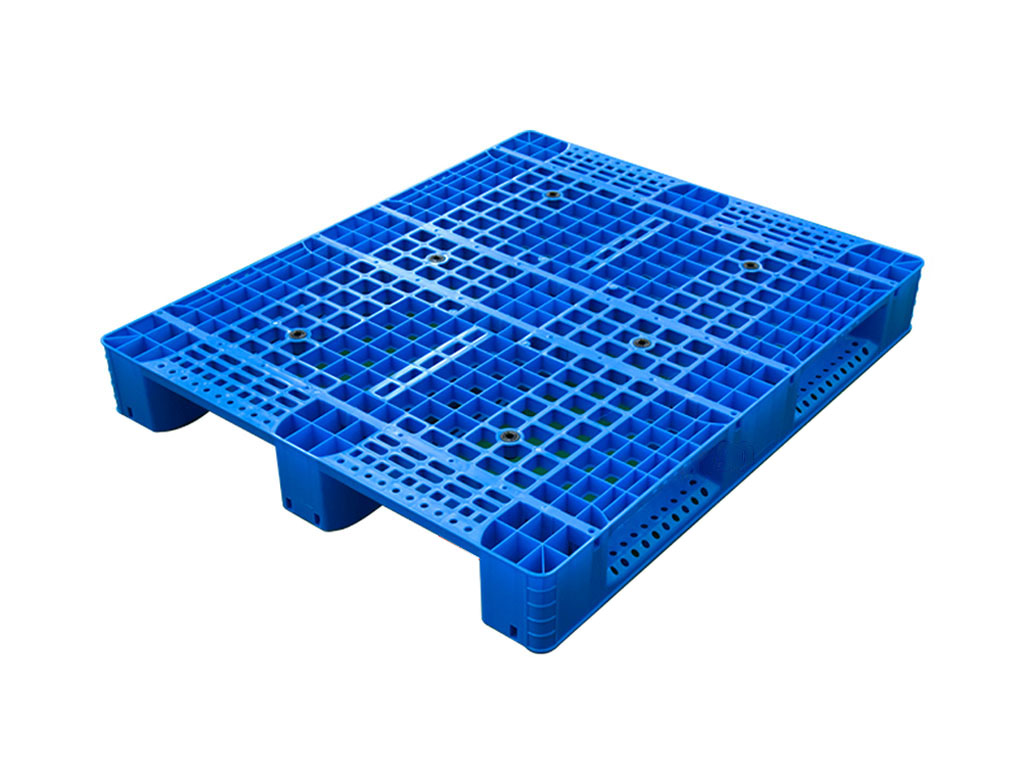
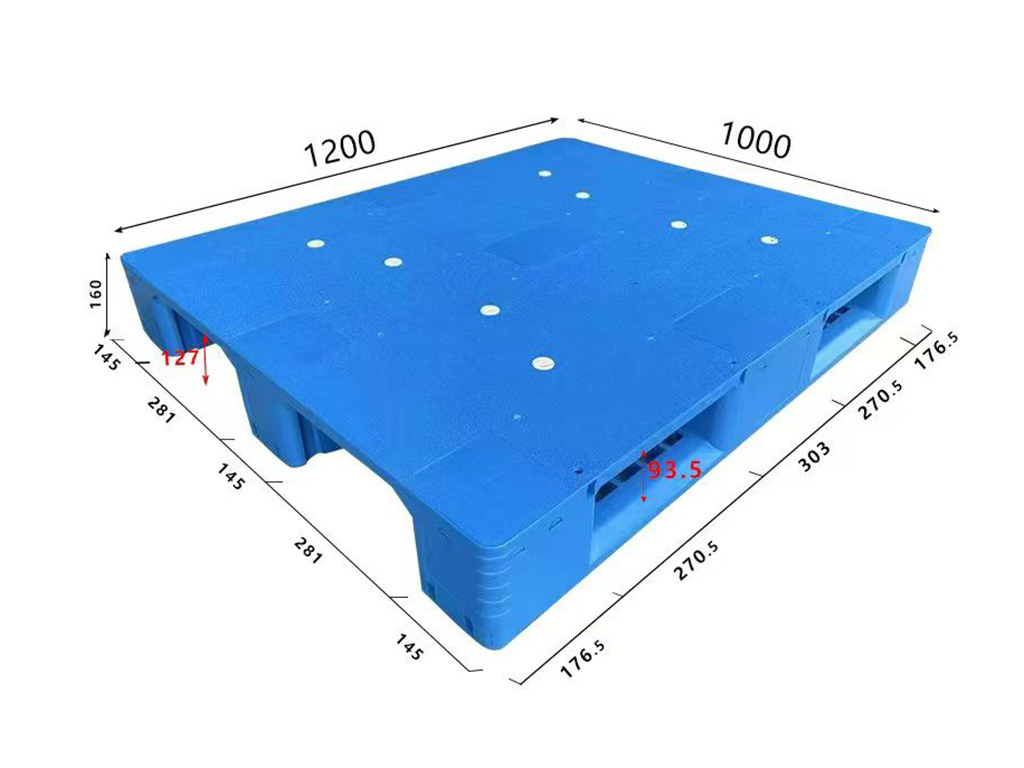
The family name matters. For example, the BAOHENG catalogue lists both BH1210 Grid 3-Runner and BH1210 Solid 3-Runner. Both have a 1200 × 1000 mm footprint, while their listed heights are 150 mm and 160 mm respectively. A purchase instruction saying only “BH1210” leaves important details unresolved.
| Sample record | What to confirm |
|---|---|
| Identity | Family, model, sample ID and drawing revision |
| Construction | Deck, underside, material specification and reinforcement arrangement |
| Traceability | Supplier quotation, sample date and available batch identification |
| Intended use | Load pattern, support arrangement, handling route and environment |
Catalogue sources: BH1210 Grid 3-Runner and BH1210 Solid 3-Runner. Their dimensions help identify candidates; they do not establish approval for your equipment.
2. Agree on the test conditions and acceptance criteria
Before the sample arrives, ask the pallet supplier and system provider to review the same written plan. Define the payload separately from the total loaded mass, including the pallet. Describe how cartons, bags, drums or individual feet contact the deck, and include any off-centre loading or overhang.
For storage, specify the support direction, clear span, contact width, temperature and longest loaded dwell time. For movement, list the equipment, travel orientation, transfer points and operating conditions to be reviewed. Identify who will witness the checks and who can approve the result.
Do not fill missing acceptance limits with generic figures from another project. Deflection limits, dimensional tolerances, trial duration, sample quantity and cycle count should come from the applicable specification and an agreed test plan. Leave unresolved items visibly marked “to confirm.”
If the candidate has not yet been selected, start with the seven-check AS/RS pallet selection guide.
3. Measure the interfaces that can stop the handling route
Compare the actual sample with the agreed drawing. Overall length and width are only the beginning: inspect height, runner contact surfaces, fork openings, pickup clearances, edge details and visible damage. Record the measuring method, measured values and acceptance limits, with photographs of the relevant positions.
Check the loaded envelope as well. Stretch wrap, leaning packages and product overhang can change what passes through a centring or profile-check station. A dimensionally acceptable empty pallet does not establish clearance for every unit load.
4. Review rack performance under the intended conditions
A floor-supported load check and a rack-supported check answer different questions. When reviewing a report, first match its model, material and reinforcement to the sample. Then compare the support arrangement, load distribution, temperature and duration with the intended application.
ISO 8611-3:2011 addresses maximum working loads for known payloads in different handling environments. That scope is a reason to keep payload and use conditions attached to any working-load statement. Our rack-load guide explains the information to request.
Where an additional loaded-storage evaluation is agreed, use the approved procedure and record the support setup, measurement positions, observations under load and condition after unloading. The responsible engineering team should define the method and limits. A successful short trial alone does not establish long-term rack performance.
5. Run representative conveyor and shuttle trials
Have the system provider coordinate the trial through the critical handovers: infeed, centring, lift, shuttle or stacker-crane pickup, rack placement and outfeed. Include each relevant travel orientation and load pattern in the agreed scope.
Observe runner support, entry and exit behaviour, pickup clearance, positioning and sensor detection. Record package movement and any contact with stops or guides. Where relevant, include the system provider’s normal start, stop and accumulation sequences. Use the operating procedures and guarding required for the equipment.
For every exception, record where it happened, which sample and load were involved, what was observed, and what changed before a repeat trial. Keep videos linked to the trial ID. “Ran smoothly” is less useful for a purchasing decision than a record of the route, conditions and results.
Collect the interface information using our conveyor and shuttle specification guide.
6. Use an acceptance record that shows open issues
Use one row per check or trial. The following table is a practical starting point; it is not a substitute for the project specification or a standard test report.
| Check | Evidence to retain | Decision to record |
|---|---|---|
| Configuration | Sample photos, drawing and material/reinforcement specification | Matches the quoted production configuration? |
| Dimensions | Actual measurements and approved limits | Within each agreed tolerance? |
| Loaded envelope | Package layout, wrap and profile-check observations | Clears the specified route? |
| Rack support | Applicable report or agreed evaluation record | Covers the stated conditions? |
| Equipment trial | Route, load, operating conditions and exception log | Meets the agreed trial criteria? |
| Release | Open-item list, approved specification and sign-off | Approved, pending or rejected? |
Mark an untested condition pending, rather than treating it as a pass. For an unresolved issue, add an owner, next action and review date. Link the final approval to the agreed drawing and configuration, and define which material, tooling or reinforcement changes require renewed review before subsequent supply.
Frequently asked questions
How many AS/RS pallet samples should we test?
Agree the quantity with the supplier and system provider for the evaluations being performed. Account for load patterns, orientations, configuration variants and whether any test changes or damages a specimen. One sample does not automatically represent every variant or a future production batch.
Is a pallet load-test report enough to approve AS/RS compatibility?
A relevant report supports the load-performance review. Equipment interfaces still need confirmation. ISO 8611-1:2025 describes pallet test methods and recognises the value of field tests on specific designs. Review the report and the equipment trial against their respective purposes.
Can an empty pallet trial replace a loaded trial?
An empty trial can help identify geometry or detection issues. It does not reproduce loaded deformation, package movement or the loaded envelope. Include representative loaded conditions in the agreed acceptance plan.
Does passing a sample trial certify the entire AS/RS system?
It records the outcome for the identified sample, conditions and criteria. System acceptance, product certification and production quality controls have their own scopes and documentation. Keep those scopes clear in the approval record.
Prepare your sample enquiry
Send BAOHENG your sample requirements with the candidate family and model, required quantity, payload and package layout, support drawing, equipment interfaces, temperature and proposed acceptance plan. If you are replacing an existing pallet, add photographs of its top, underside and critical transfer points.
Use the product catalogue to build a shortlist, then keep the sample ID and confirmed specification together through quotation, review and ordering.
Sources and image notes
- ISO 8611-1:2025 — Pallet test methods: scope of standardised pallet testing and the role of field tests.
- ISO 8611-3:2011 — Maximum working loads: working-load determination for known payloads and handling environments.
- Product dimensions and the two catalogue images come from the linked BAOHENG product pages. The cover is AI-generated. This article provides a planning checklist and does not report a completed BAOHENG test or certification.
