AS/RS Pallet Stretch Wrap: Film Tails and Clearance Checks
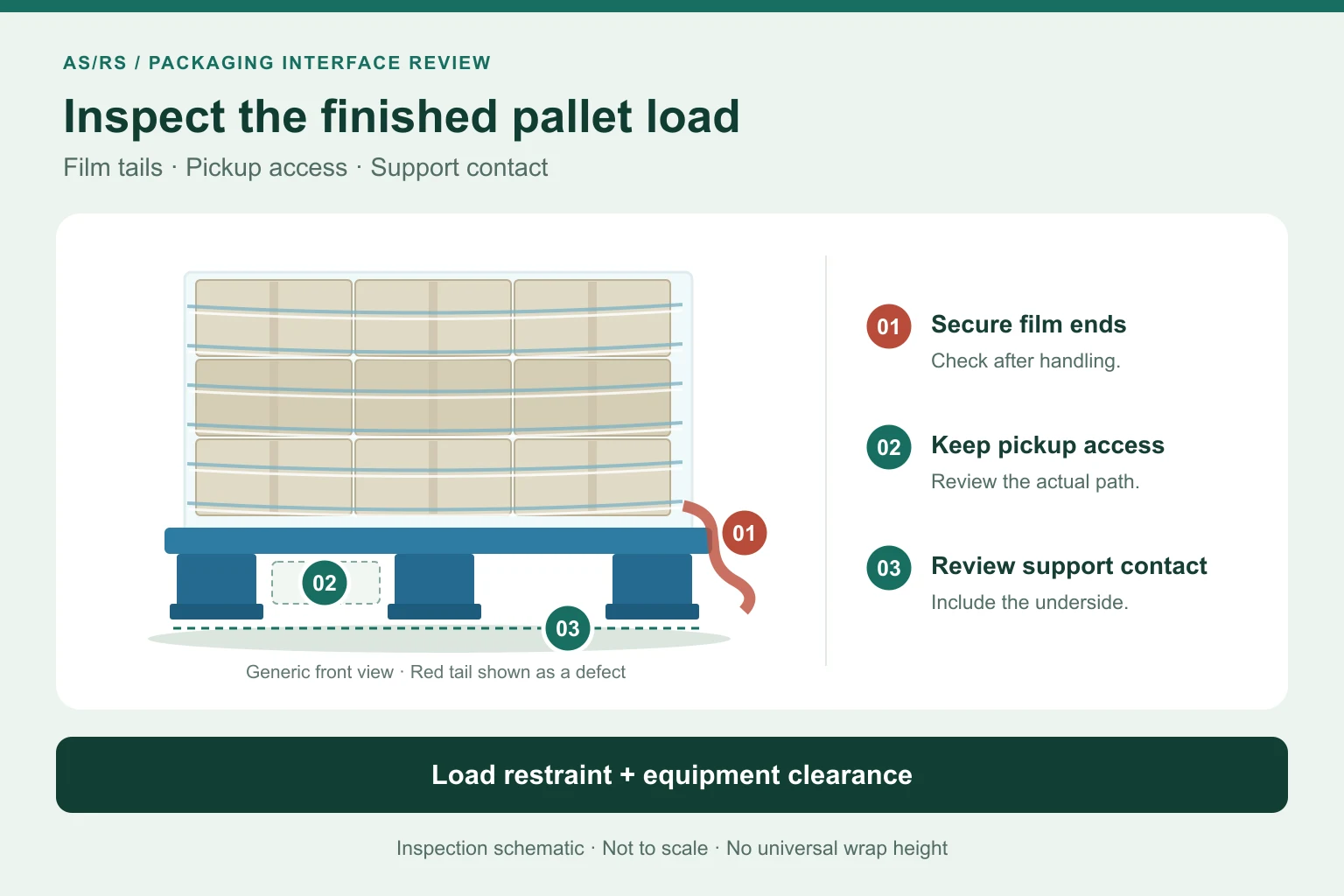
A pallet drawing describes the base. Automation also needs a consistent finished load, including the stretch film around it.
In this guide
Before a stretch-wrapped plastic pallet enters an AS/RS, check that film ends are secured, film stays clear of the required handling interfaces, and the complete wrapped load meets the system’s approved profile. Confirm both load restraint and equipment clearance. A tidy appearance or an acceptable empty pallet does not establish either result.
This guide helps warehouse buyers and integrators describe wrapping requirements alongside the pallet specification. It focuses on film tails and interface checks; it does not select film tension or replace a packaging trial.
1. Check film tails at the wrapper exit
A film tail is the loose end left at the start or finish of a wrapping cycle. Check both ends, including ends concealed near the bottom layer. Look for hanging strips, loops and a finish that has begun to peel away after handling.
Lantech’s automated-wrapping guidance identifies loose film tails as a source of conveyor entanglement and disruption to automated equipment. This supports inspecting the film finish; it does not identify the cause of a particular warehouse stoppage.
Agree how the packaging team will secure the start and finish for the actual film and wrapper. Then check the result after the planned handling sequence, not only immediately after wrapping. Record where the tail first becomes loose if the condition changes.
An unsecured tail should trigger the site’s hold-and-rework process before automatic infeed. There is no universal acceptable tail length in this guide: use the equipment and packaging providers’ written criteria.
2. Mark the pallet areas that equipment needs to use
The wrapper, pallet supplier and automation provider should review the same marked drawing. Identify where the film is intended to anchor the load and where equipment needs unobstructed access or direct contact.
| Area to mark | Question for the project review |
|---|---|
| Fork or pickup openings | Can the required pickup element enter and withdraw without catching film? |
| Runner undersides and support surfaces | Does film cross an area that rollers, chains, rails or storage supports must contact? |
| Stops, guides and centring faces | Will film folds or a film cable enter the specified contact area? |
| Presence-sensing targets | Does wrapping change the surface or opening presented to the sensor? |
| Identification label | Is the finished label position and any film over it included in the reading trial? |
These are review points, not a rule that every pallet face must be film-free. Some wrapping methods intentionally connect the goods to the pallet. Lantech’s LeanWrap explanation describes its own method of securing a load while keeping film out of forklift contact. The position used by a particular wrapping product is not a universal specification for a plastic pallet or shuttle.
For a new pallet, mark proposed film contact on the confirmed model drawing. For an existing operation, add photographs of the finished load from all four sides. Do not assume that a wrap arrangement approved on a wooden pallet transfers unchanged to a plastic pallet with the same footprint.
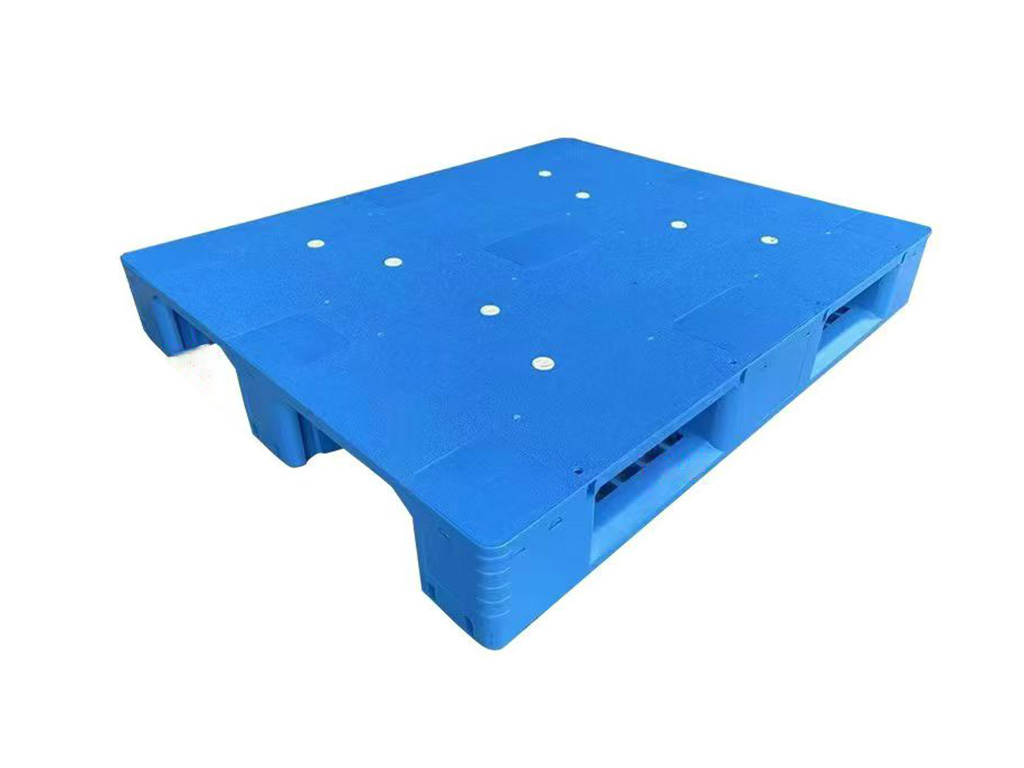
The BH1210 Solid 3-Runner photograph below illustrates the distinction between the deck, supports and openings. It shows an unwrapped catalogue product, not an approved wrapping configuration.
3. Confirm load restraint separately from clearance
Keeping film away from an opening must not leave the goods inadequately restrained. If an existing pattern conflicts with a pickup or support area, ask the packaging and equipment providers to agree a revised arrangement and validate it together.
Atlantic Packaging’s LoadLogic description illustrates the use of different wrap patterns for loads with different weights and dimensions. It is a useful reason to identify the load type and approved wrap recipe rather than apply one assumed setting to every SKU.
Keep the film specification, wrapper recipe, loading pattern and pallet model in one record. Film thickness or the number of turns alone does not establish that the finished unit meets the project’s restraint requirement. Have the packaging provider define the assessment method and acceptance criteria for the representative goods and route.
4. Measure and detect the finished wrapped unit
Check the maximum outside length, width and total height after wrapping, including folds, corner protection, labels and any projecting packaging. Compare that envelope with the system provider’s limits and positioning allowances. See the unit-load dimensions and overhang guide for the measurement record.
Also identify what each station actually detects. A sensor checking a pallet support and a sensor checking the wrapped goods see different targets. Include the actual film arrangement in the pallet sensor validation trial wherever film enters the detection zone. Do not change a sensor setting merely to make a rejected load pass.
5. Trial the complete handling route before release
Plan the trial with the system provider using representative loads, the proposed production pallet and the intended film recipe. Include the relevant transfers, stops, restarts, turns, pickups and storage retrieval sequence. The provider should define speeds, operating conditions, sample quantities and repeat counts.
Retain the observations that explain the result:
- Before-and-after photographs of the film start, finish and lower edge.
- Any film catching, tearing, peeling or migration into a marked interface.
- Load movement, packaging damage or changes to the outside profile.
- Detection or label-reading exceptions, with station IDs and event records.
- Release decision, unresolved items and the responsible reviewers.
Use the site’s approved trial and isolation procedures. Inspect or rework a suspect load at the designated safe station; do not reach into operating conveyors to remove film. Keep the wrapping record with the broader pallet sample acceptance checklist.
6. Put wrapping requirements in the enquiry and approval record
| Record | Information to share |
|---|---|
| Pallet | Model, drawing revision, sample ID and travel orientation |
| Goods | Loading pattern, mass, height and packaging type |
| Wrapping | Film specification, recipe reference, anchoring area and finish method |
| Interfaces | Marked pickup, support, guide and sensing areas |
| Acceptance | Approved profile, restraint criteria, tail criterion and trial scope |
| Release | Results, exceptions, reviewer, date and change-review responsibility |
Reassess the relevant checks when the pallet geometry, goods, film, wrap recipe or handling route changes. Keep a photograph of the approved finished unit alongside the drawing so a repeat order has a clear reference.
Frequently asked questions
Can stretch film cover a plastic pallet’s fork openings?
Check the required pickup path with the equipment provider. Film across that path can be caught or torn. Agree an anchoring arrangement that provides the required load restraint while preserving the specified equipment access.
How far below the pallet deck should stretch wrap extend?
There is no universal height for all pallet designs and handling systems. Mark the intended lower edge and anchoring area on the actual drawing, then validate them against pickup, support, sensing and load-restraint requirements.
Will adding more film solve a conveyor jam?
It may leave the actual interference unresolved. Record the stop location, film condition and equipment contact first. Have the responsible providers distinguish a loose tail, an obstructed interface, a profile issue and a load-restraint problem before changing the recipe.
Does an empty-pallet trial approve the wrapped load?
No. It covers the tested empty configuration. The goods, film and finished load profile need to be included in the applicable loaded trial.
Prepare a pallet enquiry
Send BAOHENG your pallet requirements, including footprint, load conditions, underside or pickup drawings, and photographs of the intended wrapped unit. We can discuss candidate pallet configurations and sample requirements for your packaging and automation providers to review.
Sources and scope
- Lantech — AMR-integrated stretch wrapping: loose-film-tail interference in automated handling.
- Lantech — LeanWrap: a manufacturer-specific example of load-to-pallet attachment and forklift clearance.
- Atlantic Packaging — LoadLogic: selecting wrap patterns for differing load configurations.
Sources reviewed on 9 November 2026. The inspection workflow and diagram are editorial tools, not BAOHENG test results, a wrapper specification or a compatibility certification.
